

Viewers are cutting the cord and spending their screen time on streaming platforms that cable never touched. For businesses in Palm Beach Gardens and across South Florida, that shift is a real opportunity. OTT advertising, Over-The-Top advertising, delivers video ads through internet-based streaming services, bypassing traditional cable entirely.
U.S. OTT and Connected TV (CTV) ad spend surpassed $33 billion in 2025, accounting for over 60% of total digital video ad investment. Within this massive ecosystem, living-room Smart TVs capture the lion’s share of viewer attention. Here’s what you need to know to leverage this growth locally.
What Is OTT Advertising?
OTT advertising delivers video ads through streaming platforms over the internet, on smart TVs, phones, tablets, laptops, and streaming devices like Roku or Fire TV. The “over-the-top” name refers to bypassing cable infrastructure and delivering content directly to viewers.
OTT is often confused with Connected TV (CTV).
- CTV refers specifically to the device, a smart TV, gaming console, or streaming stick connected to the big screen.
- OTT is the broader delivery method, the content, platforms, and streaming ecosystem across all devices (including mobile and desktop).
Most campaigns run across both, but the distinction matters when building a media plan or evaluating results.
How OTT Advertising Works
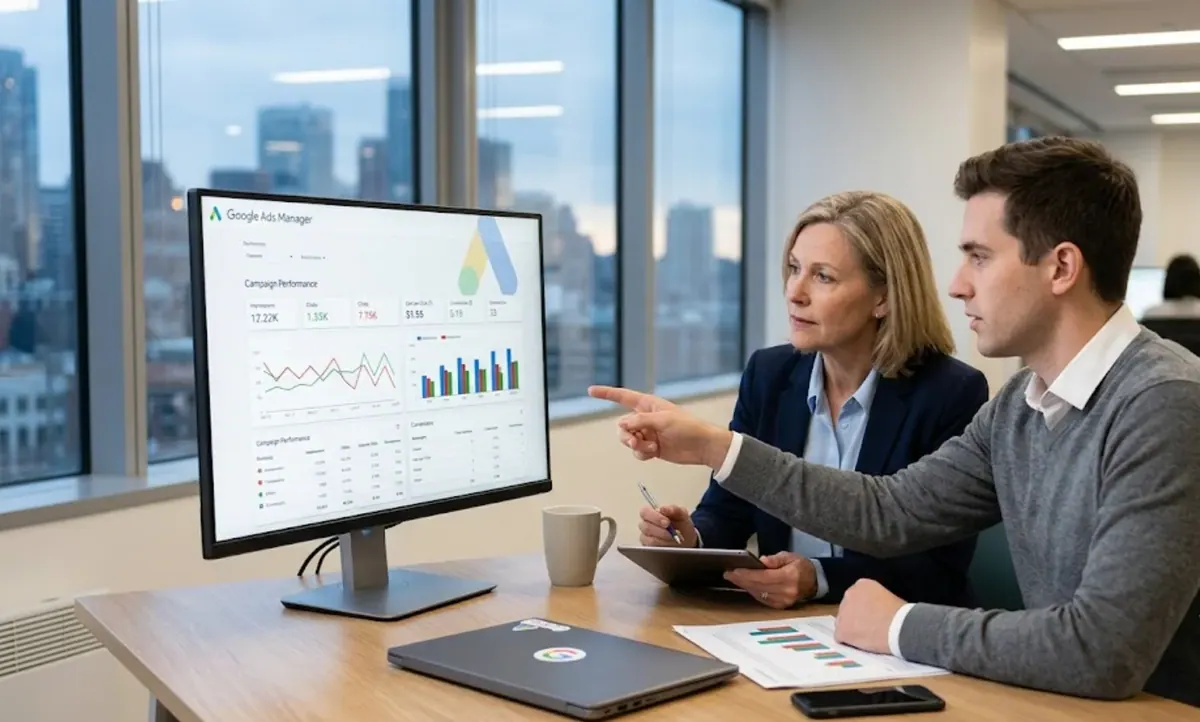
OTT runs through a programmatic ecosystem. Instead of negotiating directly with a TV network, advertisers set audience parameters, budgets, and goals, and a Demand-Side Platform (DSP) handles placement automatically across streaming apps in real time.
The basic campaign flow:
- Define your audience, target by demographics, zip codes, viewing behavior, or your own first-party CRM data.
- Create your ad, typically a high-quality 15 to 30 second horizontal video.
- Select platforms, find the ad-supported streaming services where your audience spends time.
- Buy inventory programmatically, a DSP places ads across multiple platforms simultaneously.
- Set targeting and frequency rules, control who sees the ad, how often, and on which devices.
- Launch, monitor, and optimize, adjust creative and targeting rules while the campaign runs.
The Key Advantage: You are targeting specific audience segments and households, not buying a rigid time slot and hoping the right people are watching.
Types of OTT Platforms and Ad Formats
Streaming inventory is divided into different viewing models:
- AVOD (Advertising-Based Video on Demand): Platforms like Tubi, Pluto TV, and YouTube are free for viewers and entirely funded by ads. This is where a large portion of local OTT advertising happens.
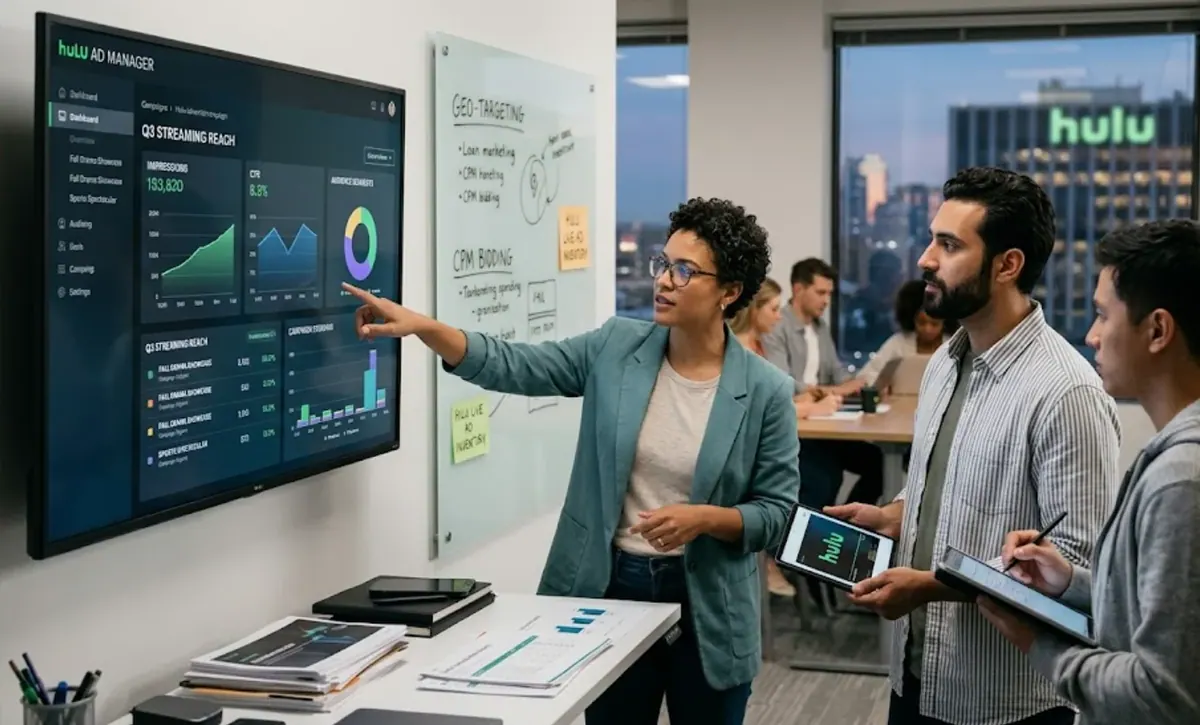
- HVOD (Hybrid Video on Demand): These are subscription-based services that offer cheaper, ad-supported tiers, such as Netflix, Disney+, and Hulu. These hybrid tiers now represent roughly 46% of subscriptions across major streamers.
- TVOD / PVOD (Transactional/Premium VOD): Pay-per-view models (like renting a movie on Apple TV) that offer highly limited direct ad space.
Common Ad Formats
- Pre-roll: 10 to 30 seconds before content begins.
- Mid-roll: Inserted at natural commercial breaks; boasts incredibly high viewer completion rates.
- Overlay and Banner: Display elements that appear during playback without interrupting the video.
- Interactive and Shoppable: Viewers can click, scan an on-screen QR code, or act directly using their remote.
Why OTT Works for Palm Beach Gardens Businesses
Local businesses have long been priced out of traditional broadcast TV. OTT changes the game:
- Hyper-Local Geographic Targeting: Reach viewers in specific Palm Beach Gardens zip codes or neighborhoods within the West Palm Beach DMA, without paying to broadcast to the entire South Florida market.
- Behavioral Targeting: Put ads in front of affluent homeowners, golf enthusiasts, families, or any segment matching your exact customer profile.
- Flexible Budgets: Start small, test different video creatives, and scale up what performs.
- Real-Time Measurement: Deliver concrete completion rates, website visits, and digital conversions, data linear TV simply cannot provide.
How Much Does OTT Advertising Cost?
Standard OTT inventory runs $20 to $50 CPM (Cost Per Thousand impressions). Premium placements on top-tier networks like Hulu or Roku range from $30 to $100+ CPM, depending on targeting precision, dayparting, and market demand.
While tighter targeting costs more per impression, it dramatically reduces ad waste. In local digital marketing, a higher CPM with precise targeting almost always outperforms a cheap CPM with overly broad reach.
OTT Advertising Best Practices
- Hook viewers in the first 5 seconds: Messaging needs to land fast in a non-skippable environment.
- Use first-party data: Uploading your own CRM email lists to target past customers or lookalikes outperforms generic demographic buys.
- Set frequency caps: Overexposure damages brand perception. Cap views so the same household doesn’t see your ad excessively.
- Connect OTT to your funnel: Follow up streaming exposure by retargeting those same households with display ads or paid search.
- Test before scaling: Run two creative versions simultaneously, find the clear winner, and shift your budget mid-flight.
Ready to Reach Streaming Audiences in Palm Beach Gardens?
OTT advertising gives local businesses a way to compete on the big screen, with the targeting precision and measurability that traditional TV has never offered. Your Local Strategy helps Palm Beach Gardens businesses build, launch, and manage streaming campaigns that reach the right households at the right time.